OCAA member colleges
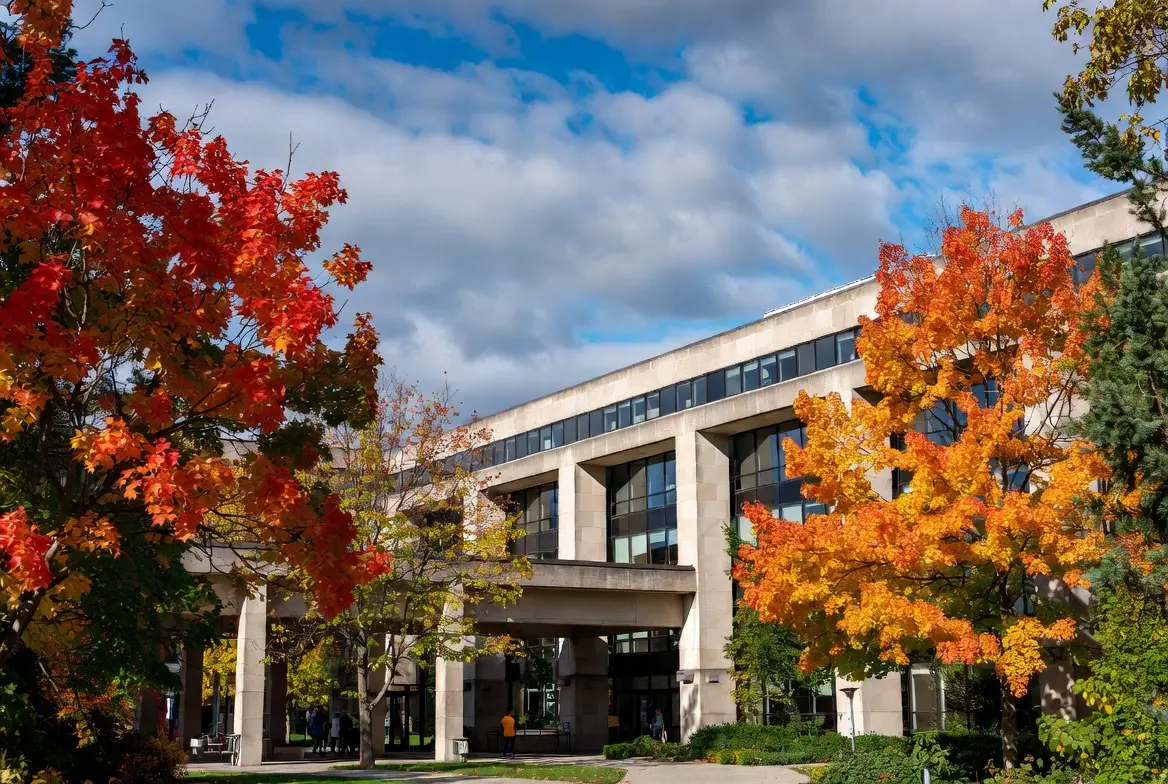
Membership spans everything from large urban campuses to small northern institutions.
The OCAA's membership covers a wide range of institution sizes and regions, from large urban colleges in Toronto to smaller campuses serving northern and eastern Ontario. That range is why the league leans so hard on regional divisions instead of a single flat standings table. Travel distances across the province make anything else impractical.
| Region | Examples | Typical constraint |
|---|---|---|
| Greater Toronto Area | Humber, Seneca, George Brown, Centennial, Sheridan | Dense recruiting pool, deep divisions |
| Southwestern | Fanshawe, Conestoga, St. Clair, Lambton, Niagara | Moderate travel, broad sport offering |
| Eastern | Algonquin, St. Lawrence, Loyalist, Durham, Fleming | Longer travel between campuses |
| Northern | Confederation, Canadore, Cambrian, Sault | Small local pool, long travel days |
The full membership
Algonquin College, Collège Boréal, Cambrian College, Canadore College, Centennial College, Collège La Cité, Conestoga College, Confederation College, Durham College, Fanshawe College, Fleming College, George Brown College, Georgian College, Humber College, Lambton College, Lakehead University (Orillia), Wilfrid Laurier University (Brantford), Loyalist College, Mohawk College, Niagara College, Redeemer University, St. Clair College, St. Lawrence College, Sault College, Seneca College and Sheridan College all compete under the OCAA banner. Not every college fields a team in every sport. Offerings vary by campus based on facilities, athletic department size and local demand.
Each college runs its own athletics department, and those pages are the right place for roster and tryout information: Seneca Polytechnic, Sheridan College, Fleming College and Algonquin College all publish theirs. The league's own membership list is maintained at ocaa.com, and the Wikipedia entry covers the association's history.
Why divisional grouping matters
Regional divisions keep travel workable while still producing a province-wide champion once crossover games and championship weekends are factored in. A college in northern Ontario faces a completely different travel reality from one in the GTA, and the divisional structure exists to stop that geography from making the regular season impossible for northern programs.
Urban and northern campuses
GTA-based colleges draw from a dense, competitive local pool and compete in divisions that reflect that concentration. Northern and remote institutions work under different constraints: smaller local recruiting pools, long travel to away fixtures, and in some cases a narrower set of sports where they can field a competitive roster season after season. Both realities are built into how divisions get drawn each year.
Bilingual and francophone members
Two francophone institutions, Collège Boréal and Collège La Cité, compete under the same league structure as every other member while serving Ontario's francophone student population. Their presence reflects the bilingual character of Ontario postsecondary education, and they are placed in regional divisions by geography rather than by language of instruction.
University campuses inside a college league
A few members, including Wilfrid Laurier's Brantford campus and Lakehead's Orillia campus, are university satellite campuses competing in what is otherwise a college association. That reflects how those campuses developed and were folded into the provincial college system. They compete under OCAA rules and divisional structure like any other member, whatever their parent institution's status elsewhere.
Program size and sport offerings
Larger colleges with bigger athletic departments field teams across more of the sport slate, from basketball and volleyball through to rugby and softball. Smaller campuses often concentrate resources on a narrower set where they can stay competitive, instead of spreading a limited budget across everything the league offers.
What it does to competitive balance
Because members vary so much in size and funding, balance is not uniform across every sport. Some divisions run considerably deeper than others depending on which colleges happen to field strong programs that year. That is exactly why crossover games carry weight late in the season. They are often the only real test of whether a division-leading record reflects provincial strength or a softer regional grouping.
Frequently asked
How many colleges are in the OCAA?
Around two dozen member institutions across Ontario, including two francophone colleges and a small number of university satellite campuses.
Why are university campuses in a college athletic association?
A few satellite campuses, such as Laurier Brantford and Lakehead Orillia, were folded into the provincial college system as they developed, and they compete under OCAA rules.
Are divisions based on college size?
No, they are based on geography. Travel distance is the constraint the divisional structure exists to solve, which is why division strength varies year to year.