OCAA Volleyball
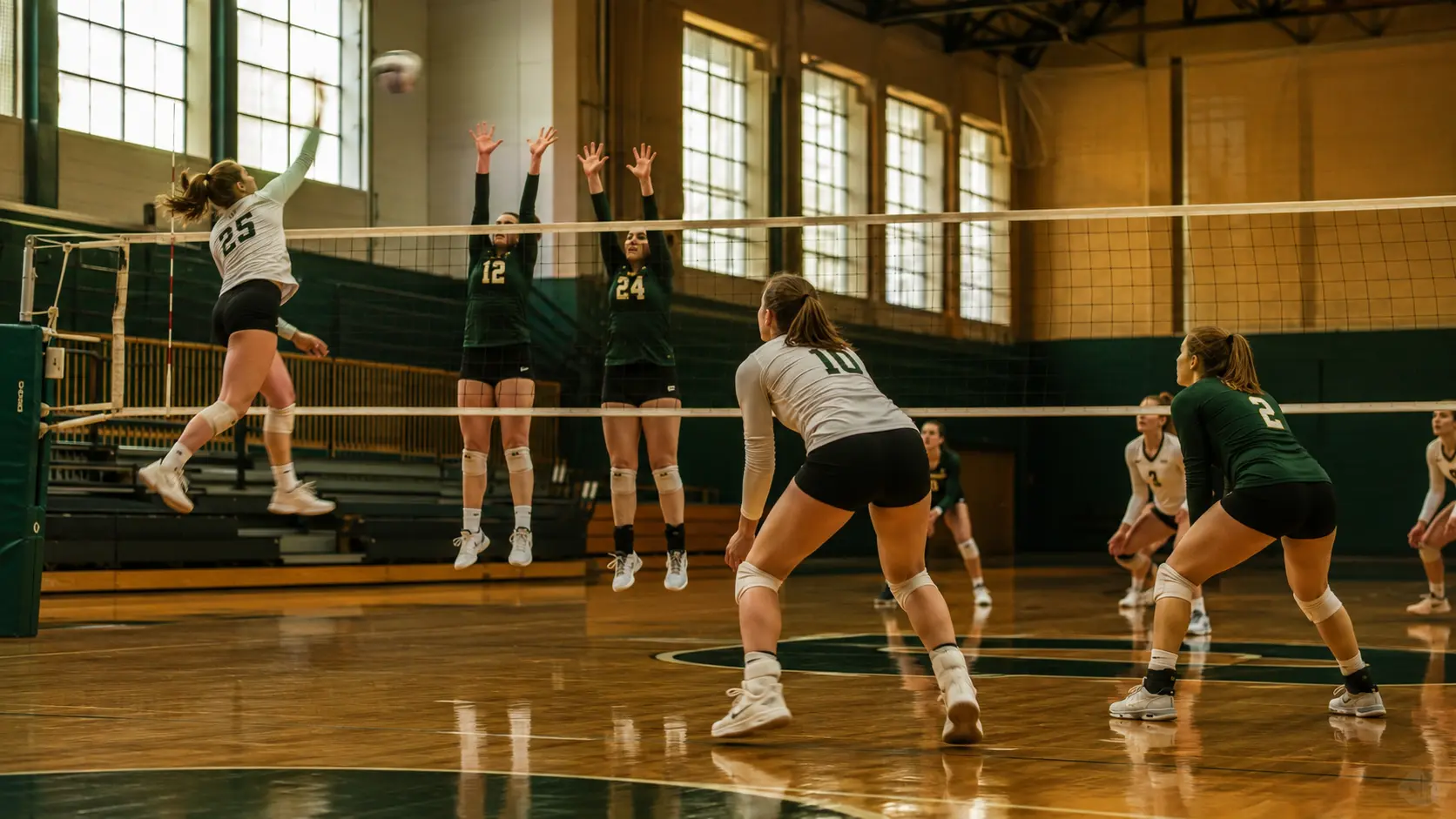
Regional divisional play runs from the fall into early winter before the provincial bracket.
Volleyball is played on both the men's and women's side across OCAA member colleges, with regional divisional play feeding a postseason bracket each winter. The Fleming College Knights are regular postseason contenders, alongside other traditionally strong volleyball campuses spread through the province's divisions.
Format in brief
- Regional divisions for the regular season.
- Best-of-five sets, rally scoring.
- Divisional standings set postseason seeding.
- Provincial championship weekend decides the title.
Format
Teams are grouped regionally for the regular season, and the top finishers advance to the OCAA championship weekend. Play typically runs from the fall into early winter. Matches use the best-of-five set format standard to college volleyball in Canada, with rally scoring, so the first side to take three sets wins. That puts a premium on avoiding a slow start against opponents who can build early momentum.
The positions that decide matches
Setter
Shapes the whole offensive identity. A fast, high-tempo system needs a different setter than a power-hitter system, so a setter graduating can change how a team plays.
Middle blocker
Organises the block and reads the opposing offense. Programs that undervalue the position often post defensive numbers well behind what their attacking stats suggest.
Libero
A back-row specialist who extends rallies and starts transition offense. Teams built purely around firepower have had to catch up here.
What makes the league competitive
Roster turnover matters more in college volleyball than in some other sports. With players cycling through two and three-year programs, divisional balance shifts year over year as strong recruiting classes move through. Early-season non-conference matches are a useful gauge of where a program stands, because last season's returning core doesn't reliably predict where a team lands once new recruits are integrated.
Blocking depth at the net
Front-row size separates the top programs from the rest more consistently than any single attacking statistic. Two or three disruptive blockers can neutralise a strong offense simply by forcing hitters into low-percentage shots. Recruiting for size and reach stays a priority for anyone building toward a championship run instead of a decent regular season.
Serving as a defensive weapon
Serve strategy carries more weight now than it once did. Coaching staffs target specific opposing passers or zones instead of serving safe to keep the ball alive. A well-aimed aggressive serve breaks up an opponent's offensive rhythm before the rally really begins, and some of the strongest OCAA programs build their defensive identity around serve pressure rather than blocking alone.
Home and away splits
Travel and gym familiarity produce a measurable home advantage in this league, and it shows up across a divisional season more clearly than in a knockout. Teams with a strong home record can look much more ordinary on the road against opponents they otherwise match up with evenly. It explains why final standings sometimes read tighter than head-to-head results suggest.
Frequently asked
How long is an OCAA volleyball match?
Matches are best-of-five sets using rally scoring, so the first team to win three sets takes the match.
When does the volleyball season run?
Divisional play typically starts in the fall and continues into early winter, with the provincial championship weekend at the end of the schedule.
How do teams reach the championship weekend?
Regular-season divisional standings determine seeding, with crossover results against other divisions factored in before the bracket is set.